Summer Shade Net Solutions for Crops
HDPE Shade Netting Guide: Agricultural & Privacy Shade Net Solutions
HDPE shade netting is a versatile knitted mesh designed to reduce sunlight intensity while maintaining excellent airflow and durability. It is widely used in agriculture, horticulture, construction, residential landscaping, and commercial applications where sunlight control and protection are required.
This guide explains the differences between Agricultural Shade Netting and Privacy Shade Netting, their applications, shade percentages, installation recommendations, and how to choose the right solution for your project.
What Is HDPE Shade Netting?
HDPE shade netting is manufactured using UV-stabilized polyethylene yarns through warp knitting technology. Compared with traditional covering materials, it offers lightweight handling, excellent weather resistance, and long-term outdoor durability.
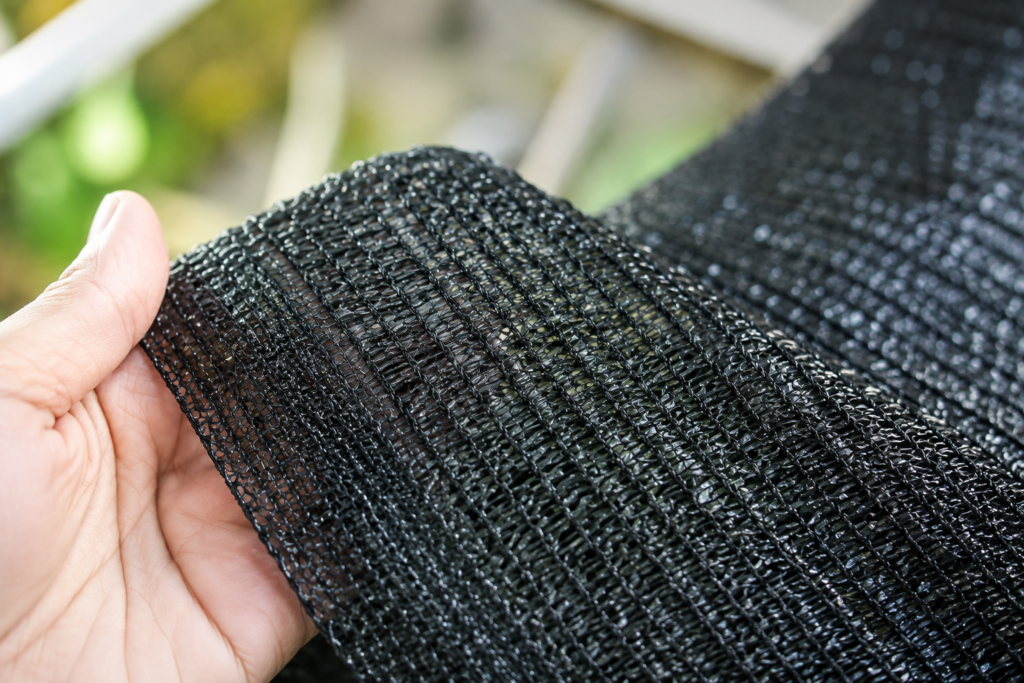
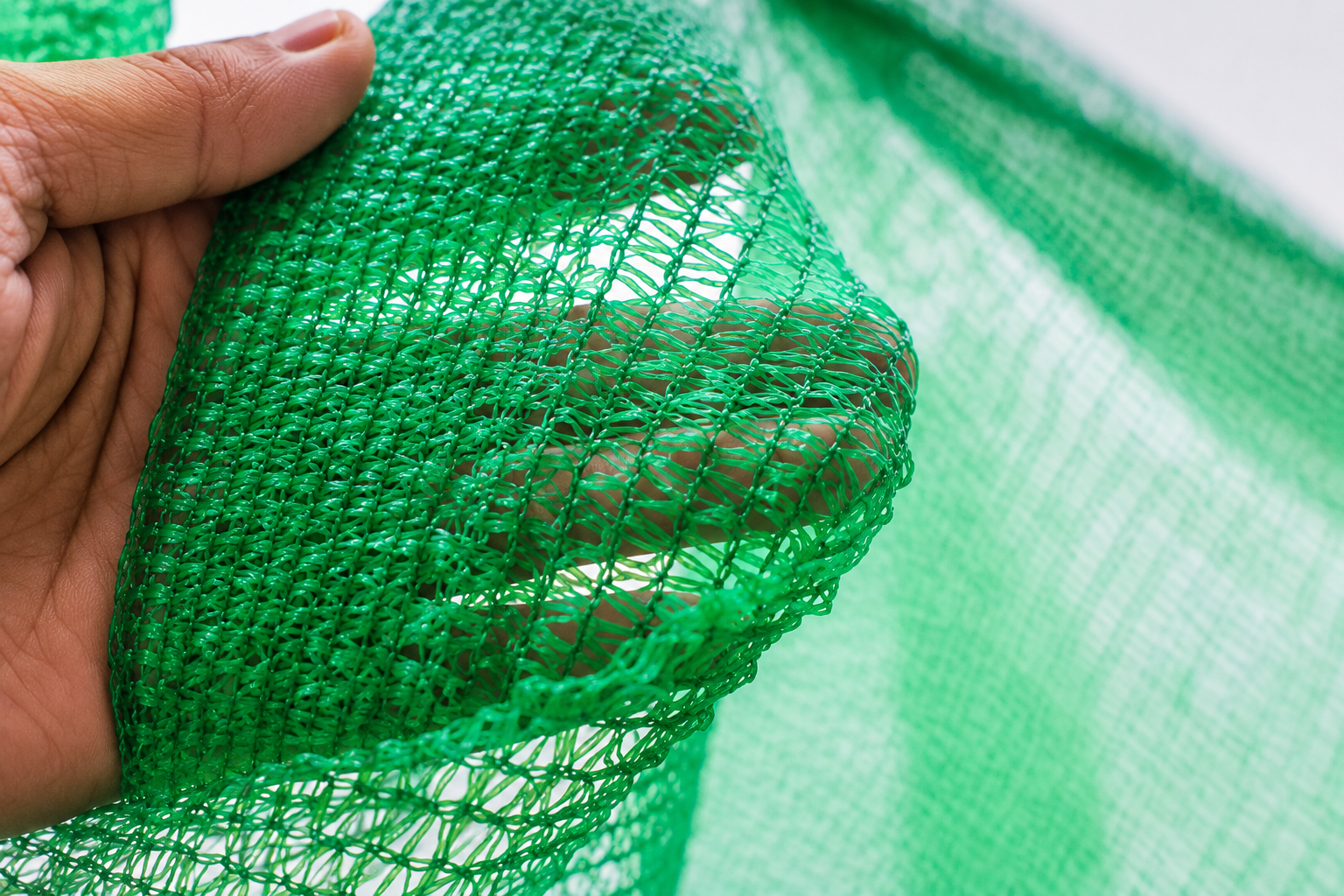
Close-up of UV-Stabilized HDPE Shade Net
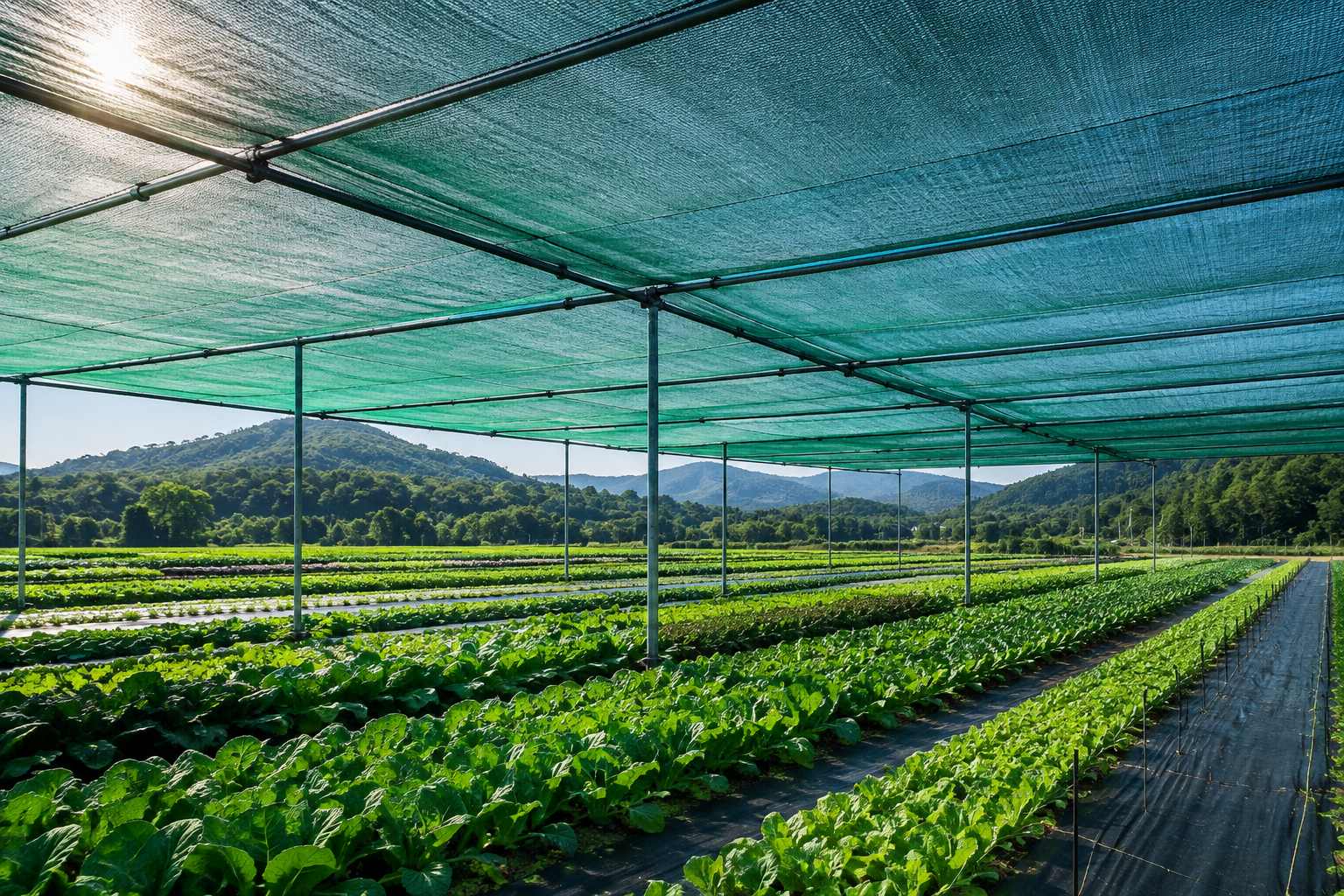
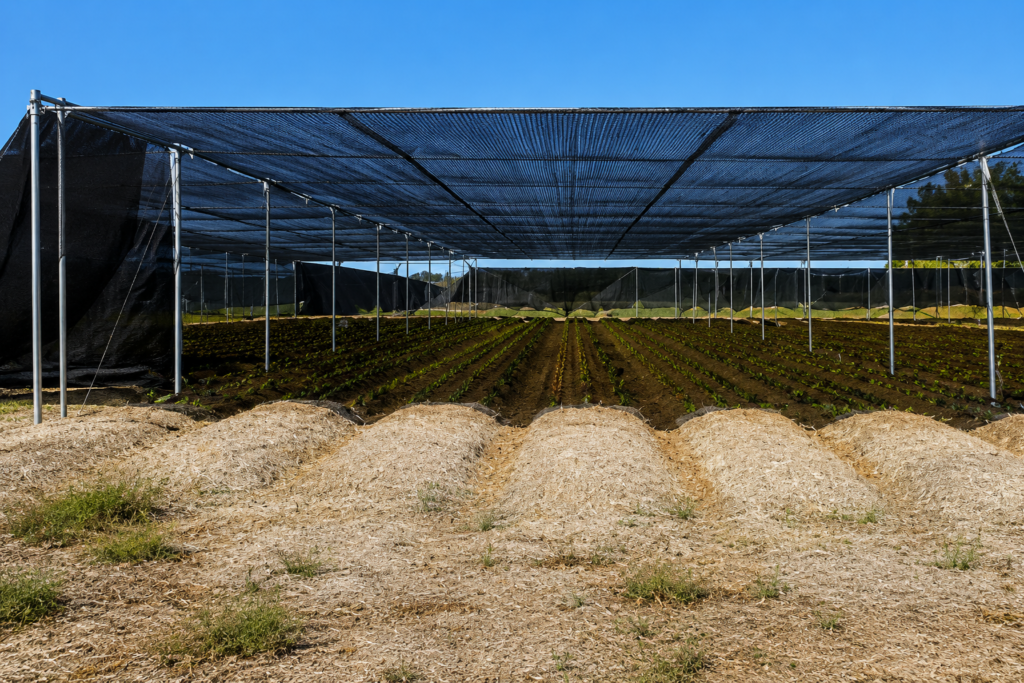
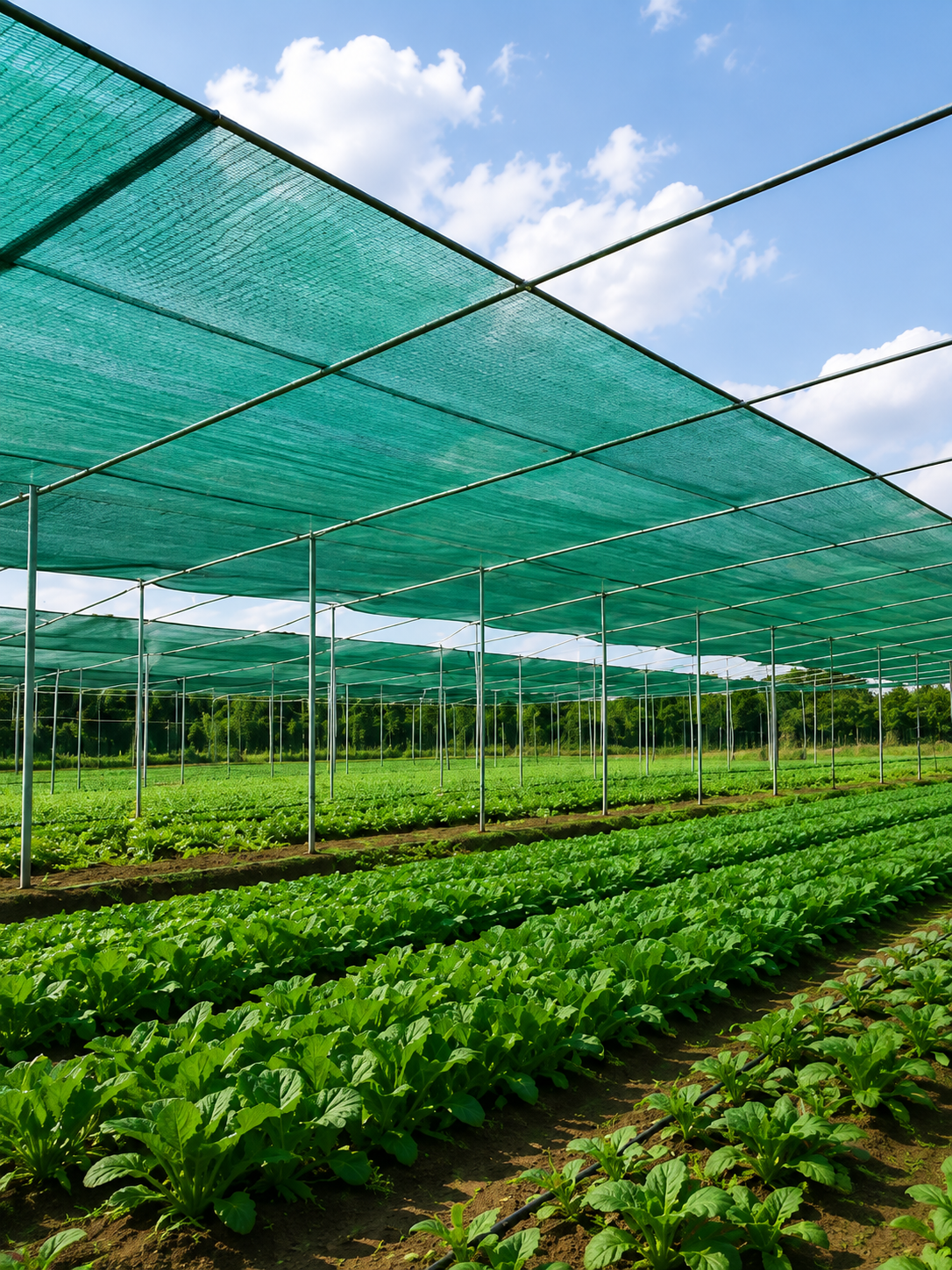
Commercial Vegetable Shade Net System
UV-stabilized HDPE tape shade net with excellent weather resistance and long service life.
Installed in commercial vegetable farms to reduce heat stress and improve crop quality.
Agricultural Shade Netting vs. Privacy Shade Netting
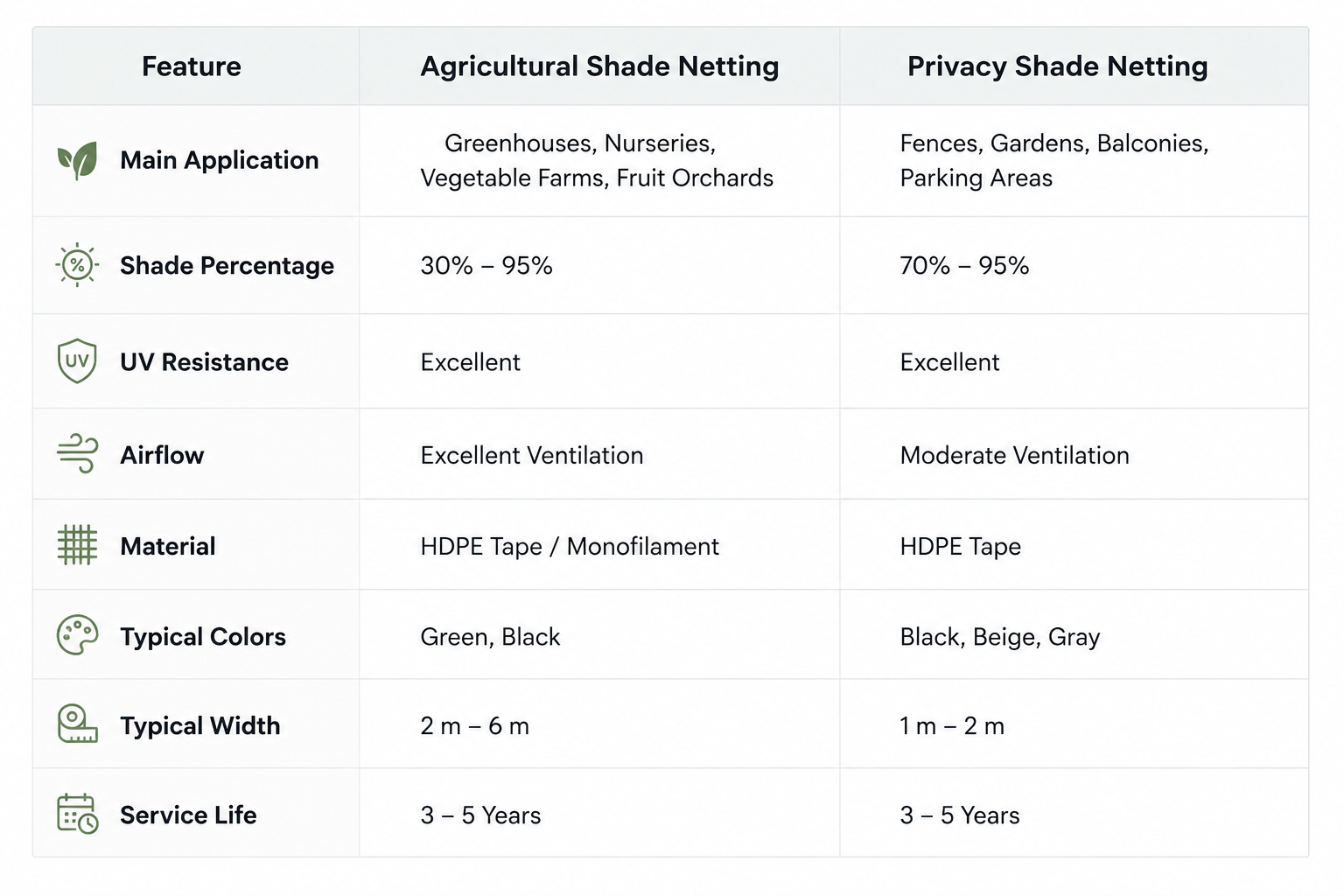
Although both products are called shade netting, they are designed for different purposes. Agricultural shade netting is mainly used to improve crop growing conditions, while privacy shade netting is designed to provide screening, wind protection, and visual privacy for residential and commercial applications.
Agricultural Shade Netting
Agricultural Shade Netting is specially designed to create a favorable growing environment for crops by reducing excessive sunlight, lowering temperature, and improving ventilation. Manufactured from UV-stabilized HDPE tape yarns, it provides long-term durability while allowing sufficient airflow and moisture penetration. It is widely used in greenhouses, nurseries, vegetable farms, orchards, and flower cultivation.
Key Features
• UV Stabilized HDPE Tape Yarn
• 30–95% Shade Rates
• Excellent Airflow
• Lightweight
• Weather Resistant
• Long Service Life
• Easy Installation
Privacy Shade Netting
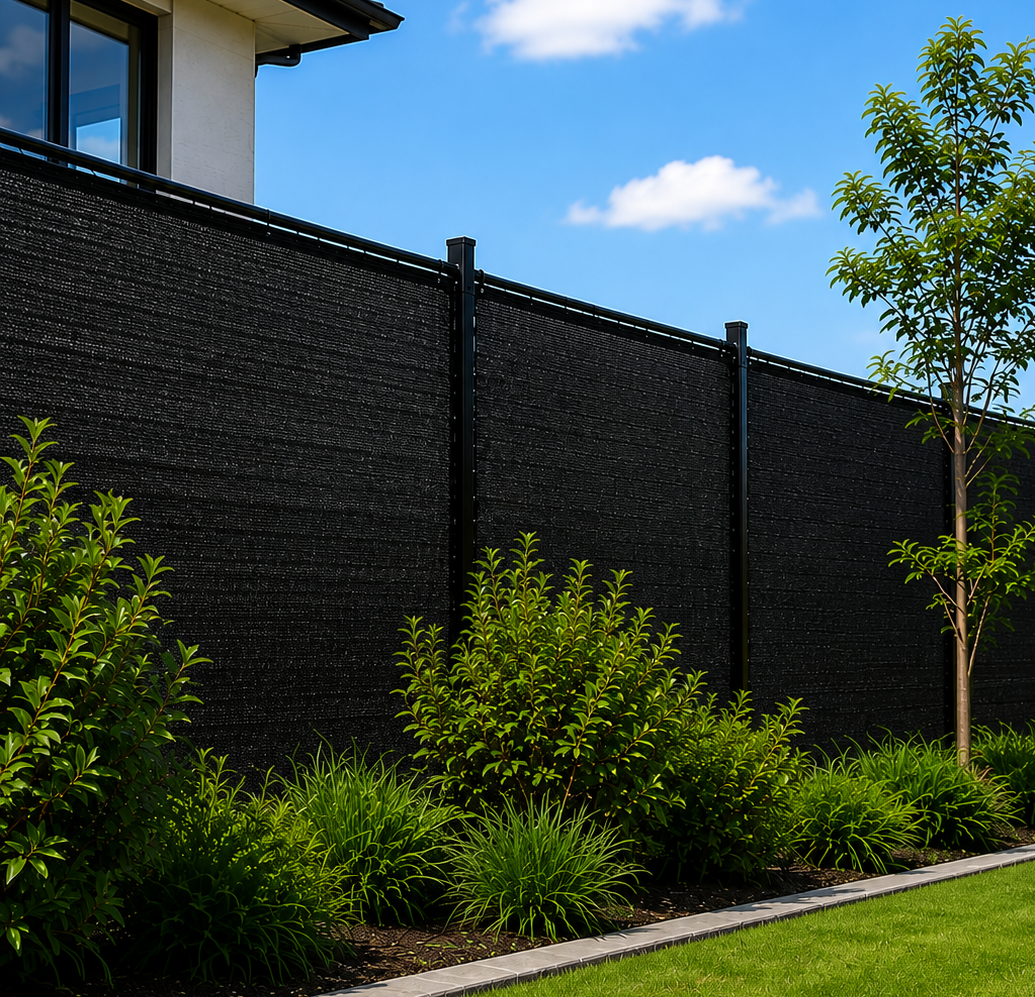
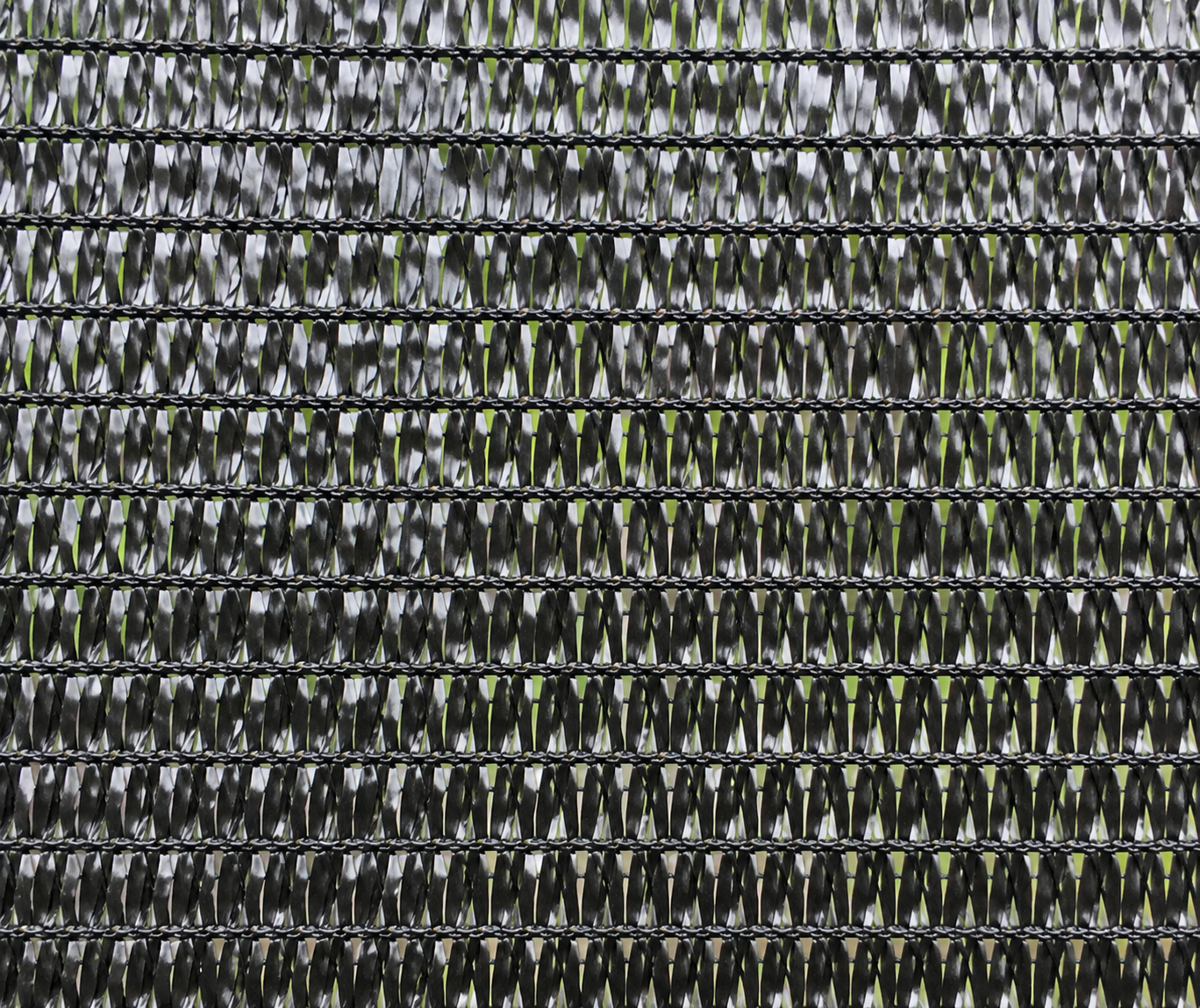
Privacy Shade Netting is designed for residential, commercial, and industrial environments where visual privacy, wind reduction, and sun protection are required. Manufactured from UV-stabilized HDPE tape yarns, it provides excellent durability while allowing sufficient airflow. It is widely used for fences, balconies, gardens, construction sites, and parking areas.
Key Features
• Up to 95% Privacy Protection
• UV Stabilized HDPE Flat Tape Yarn
• Wind & Dust Reduction
• Fade Resistant
• Heavy-Duty Reinforced Structure
• Easy Installation
• Long Service Life
How to Choose the Right Shade Net
Choosing the right shade net depends on your application, required shade percentage, color preference, and material quality. The following factors will help you select the most suitable solution for your project.
How to Choose the Right Shade Net
✓ 1. Choose the Right Shade Rate
Different crops require different shading levels.
Vegetables usually use 30–50%, while flowers and nurseries often require 70–95%.
✓ 2. Select the Proper Color
Green shade net provides natural light diffusion.
Black shade net offers stronger heat reduction and longer outdoor durability.
✓ 3. Consider the Material
Choose UV-stabilized HDPE tape yarn for excellent strength, weather resistance and long service life.
✓ 4. Match Your Application
Agricultural shade net is ideal for greenhouses, nurseries, vegetable farms and orchards.
Privacy shade net is suitable for fences, balconies and gardens.
Frequently Asked Questions
Here are answers to the most common questions about HDPE shade netting, including shade rates, colors, materials and service life.
1. What shade percentage should I choose?
For vegetables, 30%–50% shade is commonly recommended.Flowers and nurseries often require 70%–95% shade depending on sunlight intensity.
2. Which color is better, green or black?
Green shade net provides a more natural growing environment, while black shade net generally offers stronger heat reduction and better UV resistance.
3. How long does HDPE shade net last?
UV-stabilized HDPE shade net typically lasts 5–10 years depending on climate and installation conditions.
4. Can shade nets reduce temperature?
Yes. Properly installed shade nets can lower the growing area temperature and reduce heat stress while maintaining good airflow.
5. Can I customize the size and shade rate?
Yes. Width, length, shade percentage, color and packaging can all be customized according to project requirements.